News
How to pay for everyday expenses in Colombia with a US dollar balance
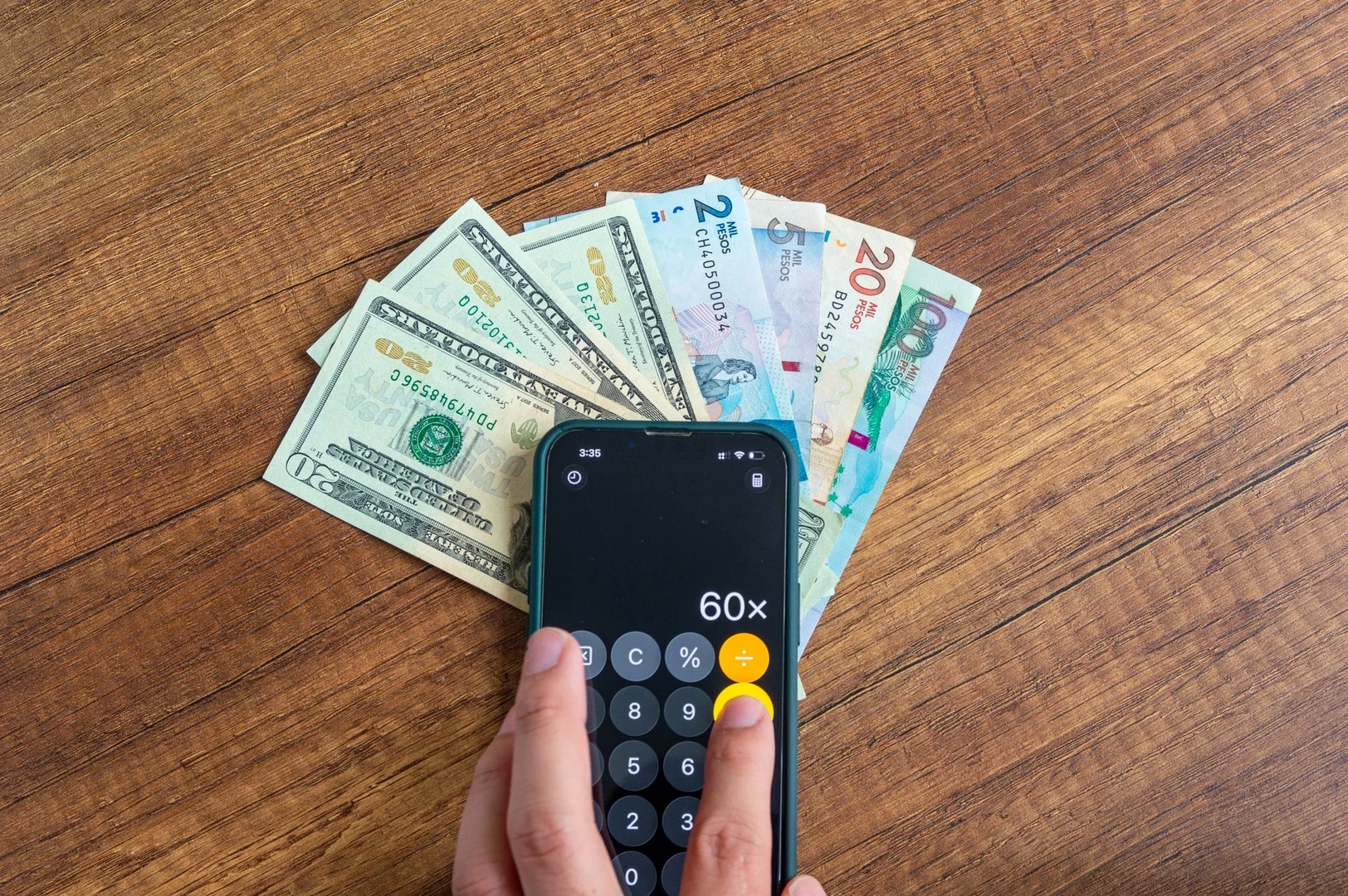
Earning in dollars while living in Colombia raises a constant question: do you convert everything at once, or do you convert as you spend? Here we tell you how to combine a peso buffer with instant conversion to pay for day-to-day expenses without losing out on the exchange rate.
Download the belo app and see how to pay with a dollar balance according to your account and current terms.
Converting all at once vs. little by little
Anyone who earns in dollars and lives in Colombia faces a decision every time they need to pay for something in Colombian pesos.
Converting the entire balance as soon as it arrives means locking in a single day's exchange rate, and if the rate is low that day, the cost drags on for weeks.
Waiting and converting every time there is an expense creates friction, because each transaction may incur a fee and forces you to watch the exchange rate before every purchase.
Paying for day-to-day expenses with a dollar balance requires a middle ground between those two extremes. The key is to separate the money into two layers: a main balance kept in dollars (or in digital dollars like USDT) and a smaller buffer in Colombian pesos that covers the week's expenses.
This separation allows you to spend dollars in pesos without exposing yourself to a single moment's exchange rate and without the friction of converting currency at the supermarket checkout.
How much to keep in local currency and how to replenish it
The Colombian peso buffer works as an operational cushion. It doesn't need to be large, just enough to cover predictable expenses.
A useful exercise is to add up the fixed expenses of a typical week—including groceries, transportation, utilities, and a night out—to define the baseline amount worth keeping available.
When the buffer drops below a certain threshold, it's time to replenish it by converting another portion of dollars.
This rule prevents running out of pesos at an inconvenient time and converting amounts that are too large when the exchange rate is unfavorable.
If the rate improved compared to the previous week, it makes sense to replenish a bit more. If it worsened, converting just enough to cover the next few days will suffice.
Recurring subscriptions deserve separate attention because they are fixed amounts debited on known dates.
Including them in the weekly buffer calculation avoids surprises, as an automatic debit that finds insufficient funds can trigger additional fees or interrupt the service.
Paying for day-to-day expenses with a digital wallet
There is an alternative to the cycle of converting and then spending: having the conversion happen directly at the time of payment.
Some digital wallets allow paying with an interoperable QR code, where the user scans the code at the merchant and the app instantly converts the digital dollar balance into local currency, deducting it from the available balance.
The amount in pesos is set at the moment of payment, without depending on a statement closing date or a rate calculated days later.
If the exchange rate at the time of payment is 4,200 pesos per dollar on a grocery purchase, the deduction from the balance is immediate and exact.
With a card that settles at the statement close, the rate may have changed, and the actual cost ends up being different from expected. Added up over a month with dozens of transactions, that difference can represent a significant percentage of the budget.
Paying for day-to-day expenses with a digital wallet that handles a balance in USDT or USDC allows you to keep dollars as your main reserve and only part with what is needed for each transaction.
At belo, we designed this solution with that exact logic: from the app, you can pay with an interoperable QR code using a digital dollar balance, and the conversion happens when you confirm the payment.
The app automatically selects the available currency, although you can manually choose which one to use before confirming.
Paying with a dollar balance this way eliminates the need to anticipate how much you will spend during the week, because each payment is settled individually.
Even so, combining a peso buffer for predictable expenses with instant conversion for the unexpected provides the greatest flexibility.
Three rules to make the system work
Daily management is simplified with a few clear rules that don't require checking the exchange rate every morning.
The key rules
Setting a fixed day to replenish the buffer—whether Monday or the day after receiving your dollar payout—turns conversion into a habit rather than a decision competing with the rest of your day.
Establishing a minimum buffer amount that triggers replenishment, regardless of whether the fixed day has arrived, helps prevent running out of pesos midweek: if your balance is below the threshold by Wednesday, it's best to replenish without waiting for the following Monday.
Mentally separating (or separating into different accounts within the app) money for operational expenses from untouchable dollar savings prevents the temptation to over-convert every time the exchange rate goes up.
These three rules solve the vast majority of everyday situations. Transportation, weekly groceries, and subscriptions are covered by the peso buffer.
Unexpected expenses, such as dinner or an unplanned purchase, are handled through point-of-sale conversion from the wallet.
And the bulk of the balance stays in dollars, protected from the volatility of the Colombian peso, available whenever it is truly needed.
Download the belo app and check the current terms according to your account.
Frequently asked questions about paying for day-to-day expenses in Colombia with a dollar balance
How large should the Colombian peso buffer be?
The ideal buffer covers the predictable expenses of a typical week, including groceries, transportation, utilities, and recurring subscriptions.
When it drops to 30% of that baseline amount, it should be replenished with a new dollar conversion.
Is it safe to keep savings in USDT or USDC inside a digital wallet?
Digital dollars like USDT and USDC are pegged to the value of the US dollar, protecting them from the volatility of the Colombian peso.
Security largely depends on the wallet you use, so it is best to choose platforms with a verifiable reputation and robust authentication.
When makes sense to convert more dollars than the bare minimum?
If the exchange rate improved compared to the previous week, replenishing an amount greater than the minimum can be advantageous.
If the rate worsened, converting just enough to cover the next few days and waiting for an improvement will suffice.
What happens if a subscription is debited and the peso buffer is empty?
An automatic debit that encounters insufficient funds can generate additional fees or interrupt service.
Including subscriptions within the weekly buffer calculation, and not just variable expenses, avoids this problem.
Can I use this system if my dollar income is irregular?
Yes. Instead of setting a weekly replenishment day, the minimum threshold rule works just as well.
When the buffer drops below 30% of the baseline amount, you convert what is needed regardless of when your last payout arrived.


