News
How to separate remittance money from everyday expenses
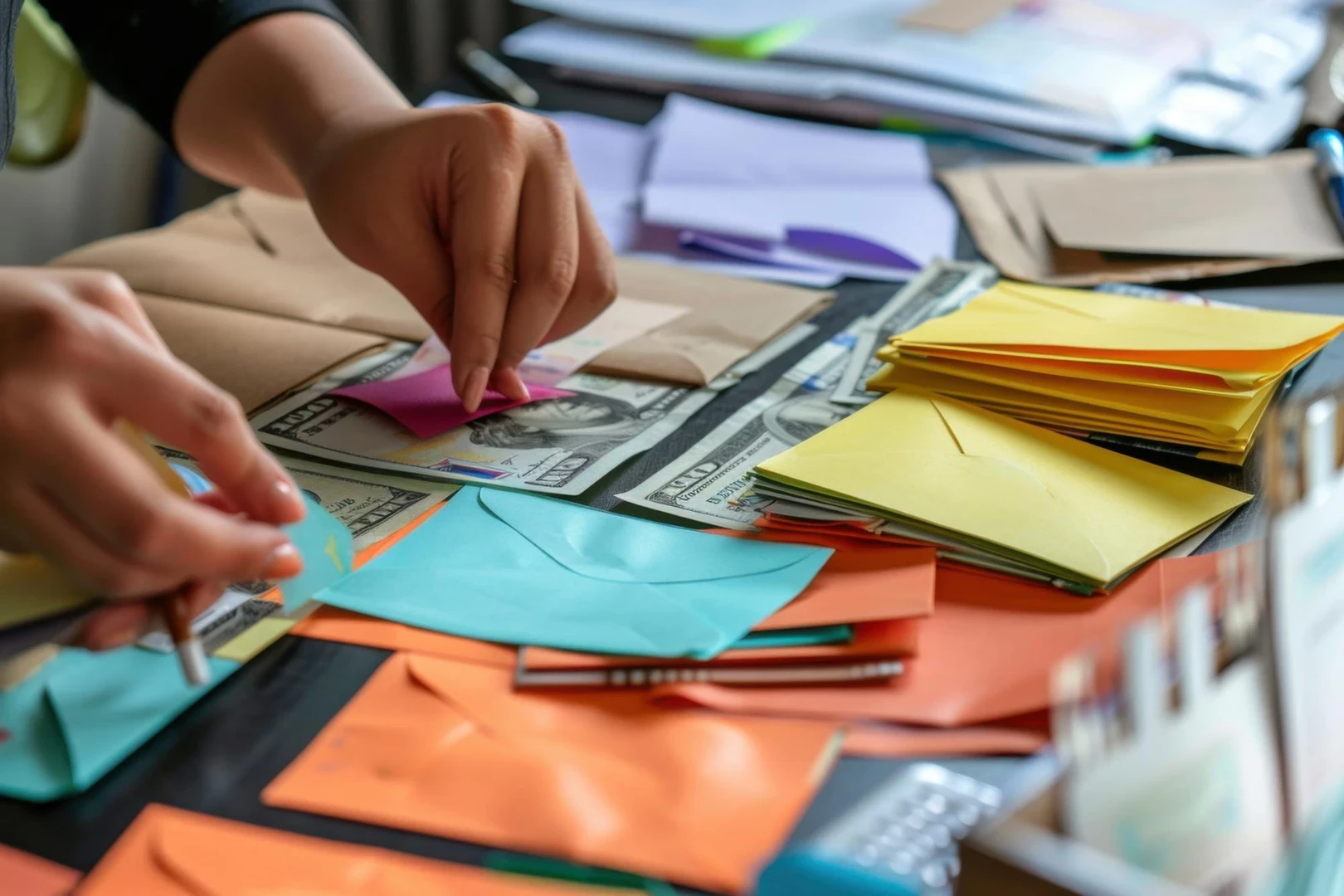
Money that comes in through remittances usually disappears into the general balance before you can even decide what it was for.
Here we tell you how to separate it in the first few minutes after it is credited, with concrete percentages and savings spaces with their own name and goal.
Download the belo app and organize your remittances according to your account and current conditions.
Why remittance money disappears before the end of the month
Someone receives 300 dollars from abroad. They see them reflected in their balance, along with the 40 they had left over from the previous week. Suddenly they have 340 on a single screen, and that feeling of momentary abundance triggers decisions they wouldn't make if the money were separated.
A purchase here, another there, and in twelve days the balance goes back to the same 40 dollars as always. Knowing how to separate money to save is what makes the difference between someone who receives remittances from abroad and builds something with them, and someone who watches them pass by without leaving a trace.
The problem has a psychological root rather than a financial one. When all the money coexists in a single visible place, the brain treats it as available.
It does not distinguish between what arrived for rent, what should go toward an immigration process, and what can be spent on day-to-day life. This lack of visual separation turns every purchase into a decision against a total number that seems sufficient, until it is no longer.
Separating money for expenses, paperwork, and family before touching a single peso
The most useful rule for anyone receiving remittances is to act within the first five minutes after credit. If the money stays in the general balance for more than a day, the chances of spending it all multiply.
The technique is to divide it into separate spaces by purpose before the first temptation appears.
A scheme that works well for migrant profiles starts with three categories with concrete percentages. If 300 dollars arrive, a practical distribution would be as follows:
How to distribute a 300-dollar remittance
50% (150 dollars) goes to the family transfer, which is probably the main reason for the remittance.
30% (90 dollars) goes to a savings space for paperwork, whether it is renewing documents, tickets, or any procedure that requires an accumulated amount.
The remaining 20% (60 dollars) remains as daily spending, and that is the only money that should be visible in the main balance.
Those percentages are adjusted according to each person's situation. Someone who already has their paperwork resolved can reduce that 30% to 15% and distribute the difference between long-term savings and an emergency fund.
What does not change is the principle of separating money for everyday expenses from the rest at the exact moment it arrives, because the discipline of the first few minutes replaces the willpower that fails later.
Organizing money by objectives with savings spaces
Organizing money by objectives requires a concrete place where each purpose has a name, accumulated amount, and a visible goal that shows how much is left.
At belo, we designed money boxes (alcancías) exactly for this: you can create separate spaces for each objective, choose the currency (including USDT to protect yourself from devaluation), and move funds from the main balance in seconds.
The process begins by creating a money box with a clear name.
"Ticket home", "Residency paperwork", "Send to mom" work better than generic names because every time you open the app, those names remind you what you are saving for.
Then you define if you want to set a numerical goal. If you need 200 dollars for a procedure, the visual progress bar shows you how much you have accumulated, and that concrete image generates a protective effect against the impulse to withdraw that money.
There are no terms or withdrawal penalties. You can withdraw money from a money box at any time, without waiting for business days or paying fees for early withdrawal.
That flexibility seems contradictory to saving, but it works the opposite way: knowing that you can access the money reduces the anxiety that leads many people not to separate it. And once you separate it and see the visual progress, inertia works in your favor.
You can also automate recurring deposits by choosing a daily, weekly, or monthly frequency, and the exact amount you want to set aside.
If you receive remittances every fifteen days, you can schedule the percentages you defined to automatically move on the very day of credit, eliminating the need to remember it or make the decision every time.
Three habits that prevent impulse from beating the plan
Separating money is the first step, but keeping it separated requires some behavioral adjustments that cost nothing and pay off big.
Habits to keep money where it should be
Define a weekly "review day" where you look at your money boxes and your daily spending balance. That two-minute check gives you a clear picture of how you are doing, and the difference between checking once a week and looking at the balance twenty times a day is that the latter feeds temptation while the former feeds control.
Use the 24-hour rule for any expense that exceeds 20% of your daily spending balance. If you have 60 dollars for the week and something costs more than 12, you wait a day before buying it.
Most impulses do not survive a night of sleep, and the ones that do are probably expenses that are worth it.When a larger transfer than expected arrives, allocate the excess directly to the money box with the furthest goal, instead of treating it as extra money to spend.
This "unexpected" money is what disappears fastest if it stays in the visible balance, and what has the most impact if it accumulates in a space with a defined purpose.
This third habit applies specifically to those who send or receive money to family members with irregular frequency, where the amounts change and the temptation to spend the surplus is stronger than in a predictable flow.
Download the belo app and check the current conditions according to your account.
This content is informative and does not constitute financial, legal, tax, or investment advice.
Frequently asked questions on how to separate remittance money from daily spending
How often should I check my savings money boxes?
A weekly review is enough to maintain control without generating anxiety. Looking at the balance too often can feed the temptation to move funds between spaces.
What happens if I need to use the money I separated for a procedure before completing the goal?
In apps like belo, there are no penalties for withdrawing money from a money box at any time. You can use it when you need it and resume saving later without losing what has been accumulated.
Is it better to save in dollars or in the local currency when receiving remittances?
It depends on where the money is going. If savings are for paperwork or travel abroad, saving in dollars or USDT protects value against local devaluation. If it is for daily expenses in the country where you live, local currency may be more practical.
Does this method work if remittances arrive in irregular amounts and dates?
Yes, because the percentages are applied to what arrives, regardless of the exact amount. When the transfer is larger than expected, the surplus goes straight to the money box with the furthest goal, which turns irregularity into an advantage instead of a problem.
How many money boxes is it recommended to have open at the same time?
Three or four active money boxes are usually enough to cover the main categories without causing confusion. Having too many spaces can dilute the motivating effect of seeing progress in each one.