News
How to protect your income from inflation in Venezuela
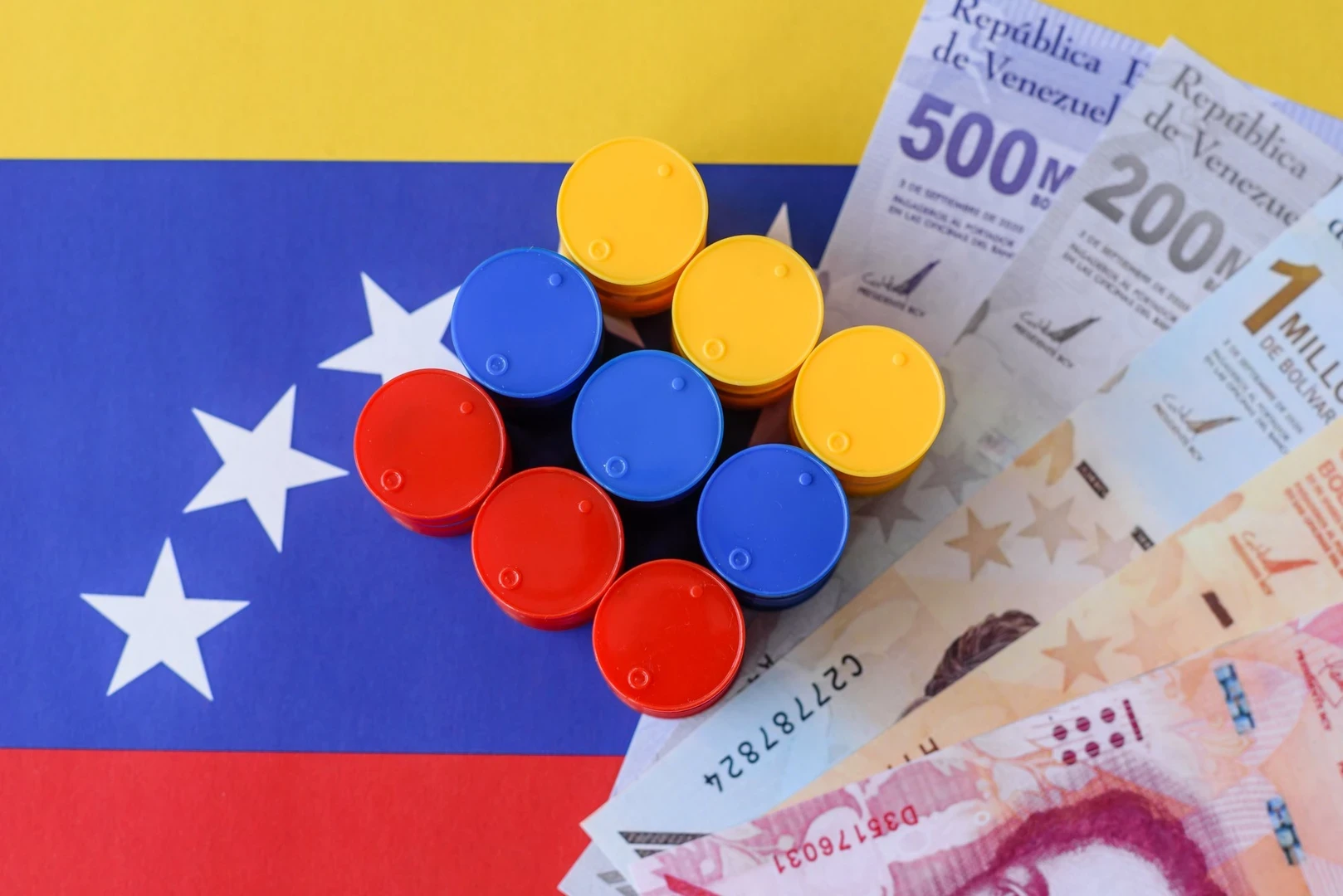
Protecting money from inflation in Venezuela is not a matter of a single gesture, such as changing everything into dollars on payday, but of building a system that is repeated every time income is received.
Here we tell you how to divide your income into three blocks, what to do with excess bolivars, and how to set up a separate fund.
Download the belo app and check how to protect your income according to your account and current conditions.
When the salary loses value before the next payday
A person who earns the equivalent of 400 dollars monthly in bolivars can end the month with a real purchasing power of 350 or less, depending on how fast the exchange rate moves that week.
Protecting money from inflation in Venezuela is not a matter of a single gesture, such as changing everything into dollars on payday, but of building a system that is repeated every time income is received.
That system has three parts that work together, and the first decision is the one that most people get wrong.
The question "how much is it convenient to leave in bolivars" is usually answered with intuition or fear. Whoever leaves too much exposes themselves to the loss of value.
Whoever converts everything is left without liquidity to pay for services, transport, or daily purchases that only accept local currency.
The break-even point depends on calculating fixed expenses for the next two or three weeks and separating exactly that amount in bolivars, without rounding up "just in case." Rounding up is leaving money exposed unnecessarily.
For someone with a stable salary, the exercise is straightforward. If bolivar expenses for the next three weeks are equivalent to 120 dollars, that is what is left in local currency, and the rest is converted on the same day or the day after payday.
For someone with variable income, like a freelancer who charges per project, the logic changes: it is convenient to calculate the average expense of the last four weeks, add a 15% margin as a cushion, and convert everything that remains above that figure.
The margin exists because irregular incomes need to absorb slow weeks without having to convert foreign currency back to bolivars, losing in each transaction.
What to do with excess bolivars
Once the current expense block is separated, three paths appear with different results.
The three options for excess bolivars
Keeping bolivars beyond immediate spending has a silent cost that accumulates week by week. The only valid reason to keep an excess in local currency is to anticipate a large expense in bolivars that already has a date, such as paying rent or a service that does not accept foreign currency.
Converting to cash dollars remains the most widely used option in Venezuela. The advantage is immediate liquidity and almost universal acceptance in businesses. The disadvantage is the physical risk of handling cash, the difficulty of breaking large bills for small payments, and the dependency on finding a reasonable exchange rate at the time of conversion.
For small amounts, the spread between buying and selling can eat up a significant percentage.Converting to USDT solves some of those problems. There is no physical risk, the conversion can be done from the cell phone in minutes, and division is total because you can move any amount. The main disadvantage is that not all businesses accept USDT directly, which means that to spend you have to convert back, and that conversion also has a cost in time and spread.
Saving in dollars in Venezuela is possible both ways, but the choice between cash and USDT depends on what you need that money for and in how much time.
A concrete case helps to see the difference. María earns a fixed salary equivalent to 300 dollars a month. She sets aside 90 dollars in bolivars for three weeks of expenses.
She converts 150 to USDT because her goal is to save for a laptop she is going to buy in a store that accepts crypto. The remaining 60 are changed to crypto dollars in cash to have liquidity for emergencies.
Carlos, who is self-employed and earns between 200 and 500 dollars depending on the month, uses a different logic. He calculates his average monthly expense in bolivars, adds a fixed margin, and divides the excess between USDT and cash according to what he needs that week.
Comparison of conversion options
Option | Main advantage | Main disadvantage |
|---|---|---|
Bolivars (current spending) | Immediate liquidity for local payments | Accumulated loss of value week by week |
Cash dollars | Almost universal acceptance in businesses | Physical risk and high spread on small amounts |
USDT | No physical risk and total division | Requires conversion to spend in stores |
How a separate fund works
The third piece of the system is the one that is postponed the most, because it seems like a luxury when income is barely enough.
Setting aside a separate fund for a specific goal, even if it is five dollars a week, changes the relationship with money in a concrete way.
Having 200 dollars mixed with current spending is not the same as having 200 dollars in a separate place labeled "emergency fund" or "online course": the second is spent much less easily.
Digital piggy banks perform exactly that function. They allow you to separate amounts into compartments with a name and purpose, which generates a minimal but sufficient friction to avoid spending what is being accumulated.
At belo we designed this feature so you can create piggy banks with specific goals and make conversions from the same app, solving two steps of the system in one place.
Converting the excess and setting it aside are integrated into a flow you can repeat every time income is received, without depending on multiple platforms or remembering to transfer manually between accounts.
This feature connects directly with the possibility of automating savings so that accumulation occurs without extra effort.
To protect money from inflation in Venezuela, the key is that the separate fund does not compete with the month's spending. If they get mixed, the fund disappears.
If you separate them with a virtual wallet that puts distance between the available balance and the set-aside balance, accumulation starts working even with small amounts.
What no strategy eliminates
Any protection system has limits that are worth keeping in mind. Converting to dollars or USDT reduces exposure to the devaluation of the bolivar, but it does not eliminate other risks.
The exchange rate fluctuates in both directions, exchange platforms may have liquidity issues during times of high demand, and cash has its own risks ranging from counterfeiting to loss.
What does change with a three-block system is the feeling of control. Instead of reacting every week to the exchange rate, the decision is already made beforehand.
Income comes in, is divided, converted, and set aside. That routine, repeated consistently, accumulates results that an isolated month does not show but that become evident after six months.
Download the belo app and check the current conditions according to your account.
Frequently asked questions on how to protect your income from inflation in Venezuela
How much of my salary should I convert to dollars each month?
It depends on your fixed expenses in bolivars for the next two or three weeks. Calculate that figure precisely, separate exactly that amount in local currency, and convert the rest on the same day or the day after payday.
Is it better to save in cash dollars or USDT?
It depends on what you are going to use it for. Cash has immediate acceptance in stores but implies physical risk and high spreads on small amounts. USDT allows you to move any amount from your cell phone without physical risk, but requires conversion when you want to spend in places that do not accept crypto directly.
What if my income varies each month?
Calculate the average of your expenses in bolivars for the last four weeks and add a 15% margin as a cushion. Everything that exceeds that figure can be converted to dollars or USDT, which avoids converting foreign currency during slow weeks and losing in each transaction.
Why is it important to have a fund separate from current spending?
When savings are mixed with daily-use money, they tend to be spent without one noticing. Separating the fund in a compartment with a name and purpose generates enough friction for accumulation to work even with small amounts.
Does this system work if I earn very little?
It works at any scale, because the logic does not change with the amount but with the proportion. Setting aside five dollars weekly in a separate fund already makes a concrete difference after six months, compared to leaving that money mixed in the available balance.