News
What to do in Buenos Aires with real dollars and pesos in your pocket
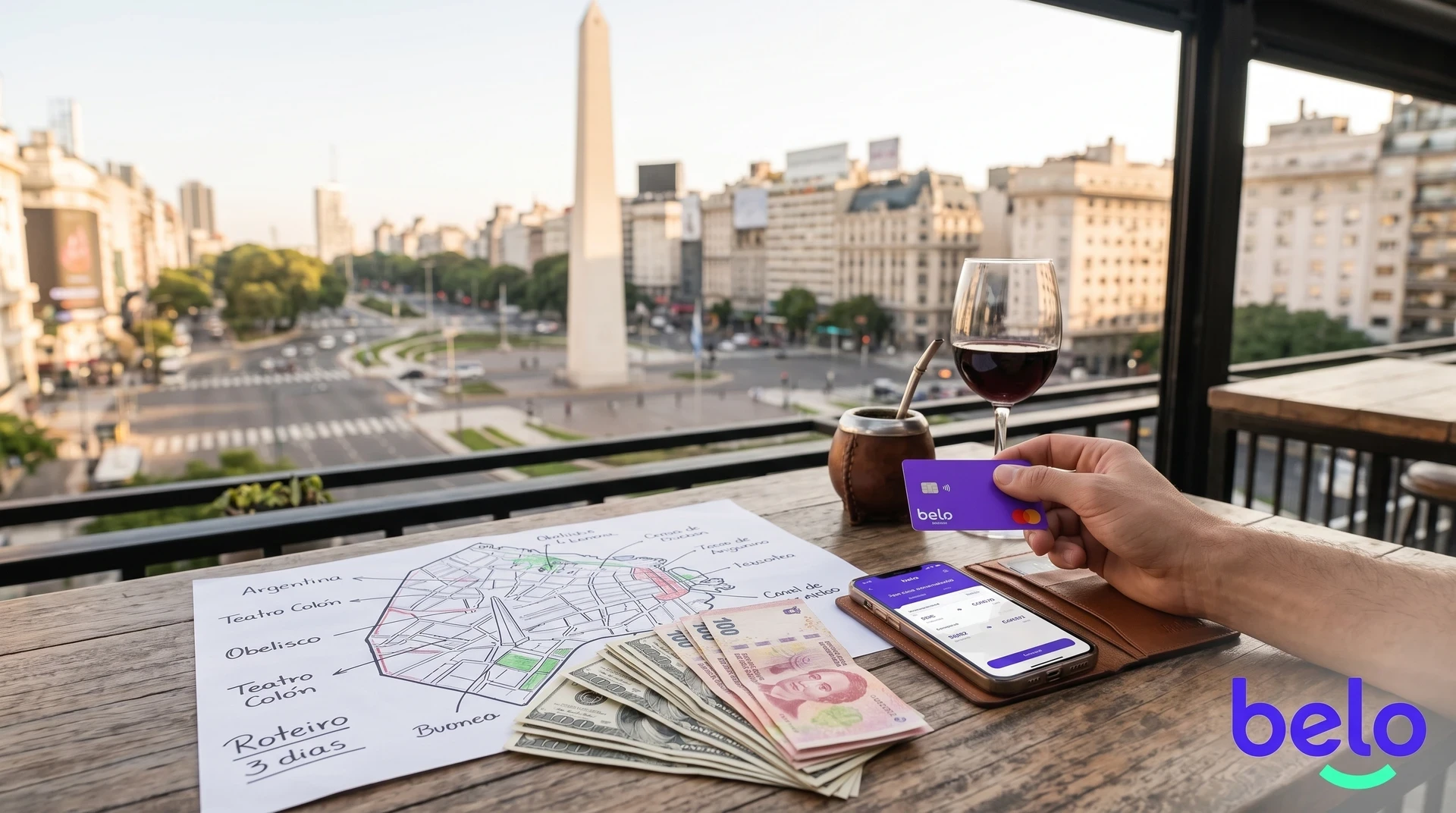
Buenos Aires has a financial learning curve that few destinations in South America demand.
The Argentine exchange rate, taxes on international operations, and how each payment method works in practice can turn the same experience into something much more or much less expensive depending on how you decide to pay.
This guide brings together what to do in the city and how to organize payments so that financial logistics do not become the main topic of the trip.
Before you leave, set up the belo app to track alternatives for paying and moving funds during your trip, according to the features available for your account and country. For discounted lodging, explore belo Travel.
What to do in Buenos Aires by neighborhood
Buenos Aires is better understood by neighborhoods than by a list of attractions.
Each neighborhood has its own identity and offers a different experience, which means you can have very different trips in the same city depending on where you decide to spend your time.
San Telmo is the oldest neighborhood in the city, featuring cobblestone streets, antique markets, and the San Telmo Market.
On Sundays, the San Telmo Fair transforms Defensa Street into a hub of live tango, crafts, and street food. It is the most tourist-heavy neighborhood, and restaurant prices reflect that.
Palermo concentrates the largest number of bars, restaurants, and Buenos Aires design shops. Palermo Soho and Palermo Hollywood have a density of gastronomic options that justifies spending at least an entire day in the area.
The parks of Palermo, including the Japanese Garden and the Bosques de Palermo, offer a green alternative for those who want to break up the urban pace.
Recoleta is where the city's most visited cemetery is located, the Recoleta Cemetery, containing the mausoleum of Eva Perón.
The surrounding area has museums, such as the National Museum of Fine Arts with free admission, and historic cafes like Richmond. It is one of the best-located neighborhoods for those who want to walk between tourist spots.
La Boca is the home of Caminito, famous for its colorful houses and outdoor tango. It is worth visiting Caminito, but avoid wandering away from the tourist streets because the surrounding neighborhood has a different security dynamic.
Puerto Madero, the renovated port area, is just a few blocks away and pairs well with a visit to La Boca.
Gastronomy: where to eat without paying more than you need to
The price difference between a restaurant on the waterfront of Puerto Madero and a neighborhood parrilla in Villa Crespo can be significant.
The quality of Argentine beef and wine does not change with the address, and residential neighborhoods outside the tourist circuit usually deliver the same experience for a lower price.
Buenos Aires happy hours between 6:00 PM and 8:00 PM, with specials on drinks and charcuterie boards, work as a cheaper complete meal than a formal dinner at a restaurant.
Neighborhood cafes with a daily menu at lunch are another option that delivers a good balance of cost and quality.
For those who want to take Argentine-style food home, local markets have better prices than tourist shops for dulce de leche, yerba mate, alfajores, and wines.
Markets like the San Telmo Market and the Belgrano Market are better for shopping than the shops on the most touristy streets.
Transportation: how to move around Buenos Aires
The SUBE card is indispensable for those who will use public transportation. Subways and buses in Buenos Aires have wide coverage and the cost per ride is affordable. Buy the SUBE card as soon as you arrive, at any subway station or authorized kiosk.
For app-based rides, avoid peak hours between 5:00 PM and 7:00 PM, when local traffic turns short trips into long ones and dynamic app fares rise. Between 10:00 AM and 4:00 PM, the city moves with more agility.
How payments work in practice in Buenos Aires
Buenos Aires has good acceptance of digital payment in restaurants, shops, and supermarkets.
Street fairs, street taxis, and smaller establishments still prefer physical cash, so having a reserve in cash is recommended regardless of the primary method you use.
Regarding banking payment methods: currency exchange usually applies a rate that includes issuer spread and international transaction taxes.
The final value appears on the statement weeks after the purchase, making real-time budget management difficult. Check conditions with your issuing institution before you travel.
Regarding cash exchange: authorized exchange offices in downtown Buenos Aires are the safest channel. Avoid exchanging money at Ezeiza airport, where conditions tend to be less favorable than in exchange offices in the city.
Operating outside authorized channels involves concrete legal and practical risks, including counterfeit bills. Always verify if the channel you are going to use operates within current legality.
About DCC (Dynamic Currency Conversion): when the payment terminal offers the option to "pay in your home currency", always decline. The exchange rate applied by the merchant is usually less favorable than that of your card issuer.
Always pay in Argentine pesos and leave the conversion to your payment method.
On belo, you can track alternatives through the app for paying and moving funds during the trip, according to the features available for your account and country. Before confirming any transaction, values and exchange rates are displayed on the screen.
To understand how payments work, consult the payment guide in the help center.
Comparison: payment methods in Buenos Aires
Method · Where it works well · What to review
Bank payment methods · Hotels, larger purchases · Spread, taxes, DCC — always refuse home currency conversion
Cash in pesos · Fairs, taxis, smaller establishments · Exchange at authorized exchange offices in the city, not at the airport
Digital payment via QR · Restaurants, supermarkets, downtown shops · Configure and test before departure; rate visible before confirming
Cash in dollars · As a backup for exchange at authorized exchange offices · Bills in good condition are more widely accepted
For questions on how to add funds before traveling, see the guide on how to add money. To understand how conversions work, consult the guide on conversions. Keep the receipts of every transaction.
Going to Buenos Aires? Download the belo app before you travel, set up your account in advance, and follow alternatives to pay during your trip.
Book discounted accommodation at belo Travel and check out the budget guide for Argentina on the belo blog.
Frequently asked questions about things to do in Buenos Aires
Which neighborhood is best to stay in Buenos Aires?
It depends on your travel style. Palermo and Recoleta are well-located and have a wide culinary offer. San Telmo is more central and has good access to the subway. Neighborhoods like Villa Crespo and Chacarita offer more affordable lodging prices with good public transportation connections.
How to avoid paying more than you need to on exchange rates?
Decline DCC at terminals, always pay in Argentine pesos, and use methods that show exchange rates before you confirm. Consult your payment method's terms with your issuing institution before traveling to understand which taxes and spreads apply.
What is the SUBE card and how does it work?
It is the rechargeable card used for public transportation in Buenos Aires, including subways and buses. Buy it as soon as you arrive in the city at any subway station or authorized kiosk. Without it, using public transportation becomes more complicated and expensive.
Which attractions in Buenos Aires have free admission?
The National Museum of Fine Arts, Palermo parks, Caminito (street access, not the shows), the San Telmo Fair on Sundays, and the Puerto Madero waterfront. Buenos Aires has a free cultural offer that can fill several days at no significant cost.
Is it worth renting a car in Buenos Aires?
Not within the city. Traffic is heavy, parking is expensive, and public transit handles urban transportation well. Renting a car makes more sense for day trips outside the city, like visiting Tigre or the Atlantic coast.
Continue exploring
For freelancers: how to reduce stress and increase productivity
Freelancer world
Spring in Argentina: 5 places that look even more beautiful this season
For travelers
3 All-Inclusive Resorts with Kids Club for Family Vacations
For travelers