News
Alternatives to fixed-term deposits in Argentina to protect your savings in 2026
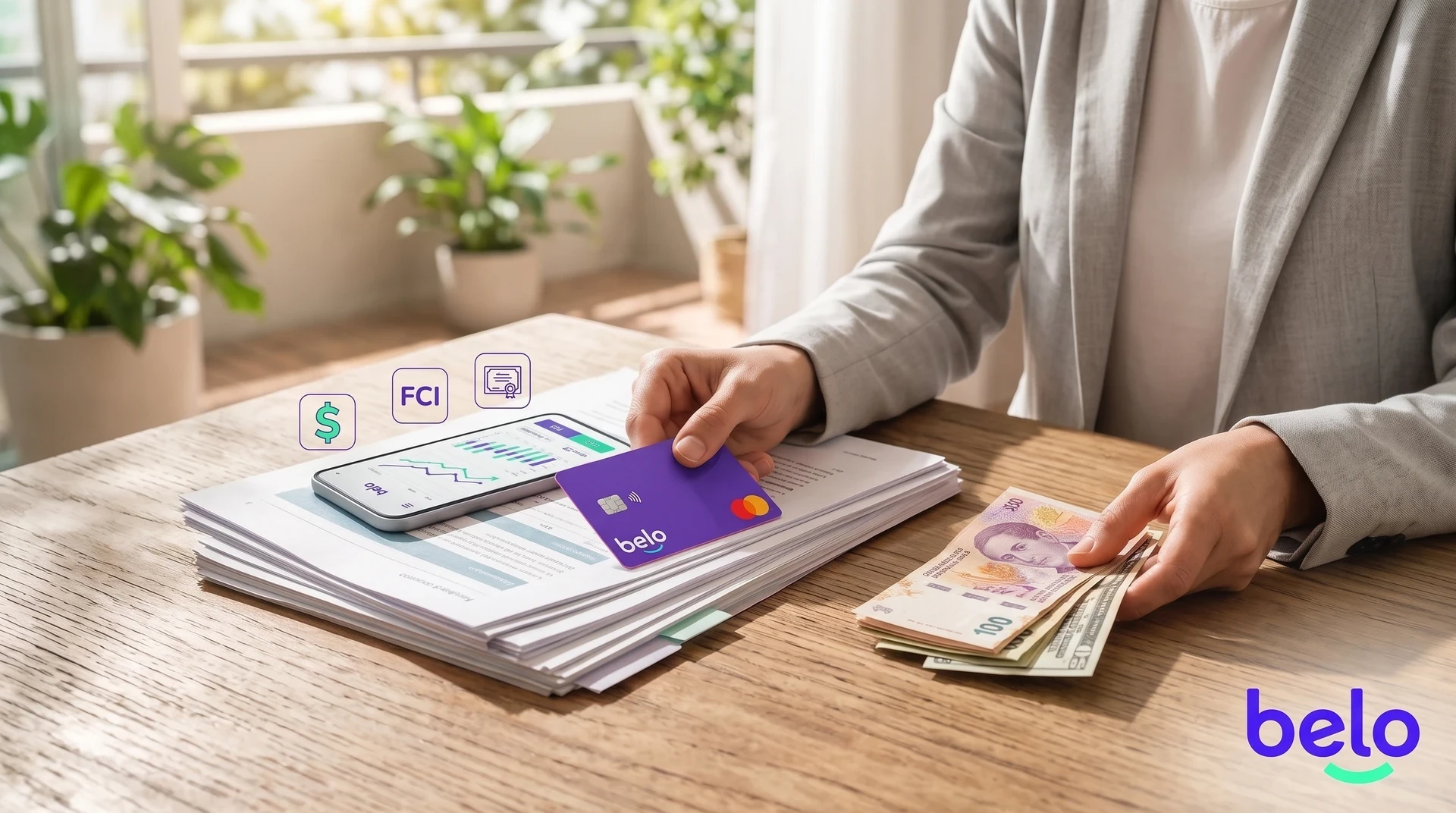
For those who earn in dollars or manage variable income, traditional fixed-term deposits are almost never the best option: they require keeping funds locked for 30 days and pay rates that hardly compensate for real loss.
Here we review what alternatives exist (digital wallets, stablecoins, mutual funds, and bonds) and what is worth looking at before choosing.
Download the belo app and check how to receive and hold dollars according to your account and current conditions.
The invisible cost of keeping dollars idle
A freelancer who gets paid in dollars via Deel or Upwork and leaves them untouched for a year can lose real purchasing power, even in dollars.
Inflation in the United States remains active, and meanwhile traditional fixed-term deposits in Argentine pesos offer rates that lag behind local inflation without catching up.
For those operating in foreign currency, the dilemma is no longer about choosing between pesos and dollars, but rather deciding what to do with those dollars once they arrive.
Traditional fixed-term deposits do not work for this profile. They require locking up funds for 30 days or more, pay yields that in 2026 will hardly compensate for real loss, and penalize early withdrawal.
For someone who needs liquidity because their income fluctuates or because they might have an unexpected expense in another currency, that rigidity has a concrete cost.
The question worth asking is how to distribute income among instruments that protect value without sacrificing access.
Three variables define this distribution, and each operates differently depending on the instrument you choose.
Liquidity: how long it takes to access your money when you need it, which can range from minutes in a digital wallet to days if you operate in the secondary market.
Cost: the sum of entry and exit fees, exchange rate spreads, and taxes that reduce the real net yield.
Risk exposure: who custodians your funds, under what regulation they operate, and what legal coverage you have if something fails.
Each alternative to fixed-term deposits in Argentina is located at a different point of that triangle, and the ideal combination depends on each person's income flow and time horizon.
Where to hold dollars without giving up access?
The first decision for those earning from abroad is where to receive and maintain those funds.
Dollar accounts in Argentina allow receiving up to USD 24,000 annually via SWIFT without the obligation to convert them into pesos, but commission fees for international transfers can reach up to 4%, processing times range from 2 to 5 business days, and monthly maintenance adds a fixed cost that many underestimate.
Digital wallets changed that equation for freelancers. They allow you to receive international payments, hold balances in different currencies, and convert when it suits you, all from your phone and with much faster processing times.
At belo we designed the app so you can receive dollars from platforms like PayPal, Upwork, or Deel, hold the balance without forced conversion, and decide when to exchange it to pesos by checking the exchange rate before confirming.
This flexibility makes a real difference when monthly income varies and you need to choose the right moment to convert.
Stablecoins (USDT, USDC, DAI) maintain a 1:1 parity with the dollar and offer almost immediate availability.
For those who already receive part of their payments in crypto or deal with clients who prefer that channel, they work as a store of value with high liquidity.
The KYC process varies depending on the platform you choose, and custody lies with you or the platform you use, without the backing of a bank deposit insurance. This difference matters as the held amount grows.
A strategy that works for many freelancers combines a digital wallet for the month's operational flow with a portion in stablecoins for short-term savings.
The key is not to concentrate everything in one place and to understand what protection each instrument offers.
Comparison of options to receive and hold dollars
Instrument · Liquidity · Key consideration
USD Bank Account · 2 to 5 business days for processing · Commissions up to 4% for international transfer and fixed monthly cost
Digital Wallet · Almost immediate · On-demand conversion without forced peso conversion, manageable from your mobile phone
Stablecoins (USDT, USDC, DAI) · Immediate · No bank deposit insurance; custody depends on the platform or the user
Mutual funds and adjusted bonds: when does locking up funds make sense?
For the pesos left over after covering expenses, or for those who have surplus dollars that they will not touch in 60 or 90 days, mutual funds and Treasury bonds offer something that neither a standard account nor a stablecoin can: yield.
The question is whether that yield justifies the lower liquidity. Money market mutual funds in pesos allow redemption within 24 hours and pay a rate that beats leaving pesos idle in an account.
For those who need to maintain a buffer in local currency (bills payment, taxes, fixed expenses), they are the most direct alternative to traditional fixed-term deposits because they do not penalize withdrawals and allow subscribing with low amounts through any bank or investment app.
USD-denominated mutual funds require a brokerage account and usually invest in corporate bonds, offering higher potential yield but also greater credit risk.
CER-adjusted bonds track the inflation index, making them a natural hedge for those holding pesos who want to prevent them from losing purchasing power.
UVA bonds operate under a similar logic, adjusting principal according to the Acquisition Value Unit (Unidad de Valor Adquisitivo).
Both require opening a brokerage account with a stockbroker (ALyC), involving a KYC process that includes ID, proof of address, and declaration of source of funds.
The process is completed in a few days and, once the account is active, you can choose the instrument and the investment amount directly from the platform.
Which instrument matches your horizon?
If you need daily liquidity, a money market mutual fund is the most suitable option because it allows redemption in 24 hours without penalty.
If you can wait between 30 and 90 days and want to hedge against peso inflation, a short-term CER bond offers direct coverage linked to the price index.
If your surplus is in dollars and your horizon is greater than 6 months, a dollar-linked mutual fund or a USD-denominated bond adds yield without giving up the denomination.
The distribution depends on how much of your monthly income you need available during the week versus how much you can leave to generate earnings.
What is worth measuring before choosing?
Comparing these alternatives without clear metrics leads to decisions made by inertia.
Three indicators help organize the evaluation: the total cost of operating (entry and exit fees, maintenance, and exchange spread), the real availability timeframe (which in a mutual fund can be 24 hours but in a bond can extend until maturity if you do not want to sell in the secondary market at a loss), and the effective coverage against inflation, which is direct in a CER bond, partial in a money market mutual fund, and in a stablecoin depends on the dollar maintaining its global purchasing power.
Regulatory risk deserves special attention in the case of stablecoins in Argentina. The CNV has been tightening its position on virtual assets, and conditions can change.
Virtual assets are neither legal tender nor securities approved by regulators, meaning that the holder's legal protection is limited compared to a bank deposit or a Treasury bond.
This doesn't mean they shouldn't be used as a tool, but it does require analyzing how much of your assets you are willing to expose.
For those earning in dollars and living in Argentina, the most robust combination usually includes three complementary layers.
A digital wallet for monthly operational cash flow with on-demand conversion, covering receipts, payments, and daily expenses.
A mutual fund or interest-bearing account for the month's pesos, which offers fast redemption without penalty and performs better than a checking account.
A medium-term instrument (CER bond or USD-denominated mutual fund) for the surplus that can wait, where the yield compensates for the lower liquidity.
This structure protects liquidity, covers peso inflation, and maintains exposure to dollars where it makes sense, without relying on a single instrument or a single type of risk.
Frequently asked questions about alternatives to fixed-term deposits in Argentina that protect your savings
Can I use more than one of these alternatives at the same time?
Combining instruments is precisely what is recommended when managing variable income. Distributing money between a digital wallet, a money market mutual fund, and a medium-term bond reduces reliance on a single type of risk and improves both available liquidity and overall performance.
There is no fixed ratio: it depends on how much you need available each month and how much you can leave locked without affecting your daily operations.
What happens if I need to withdraw money from a mutual fund early?
Money market mutual funds allow redemption within 24 hours without penalty, which sets them apart from traditional fixed-term deposits. Longer-term mutual funds or bonds on the secondary market may involve selling at a lower price than expected if the market is unfavorable at that moment.
Before subscribing to any fund, it is advisable to review the management regulations to confirm redemption timeframes and whether any early exit fee applies.
Are stablecoins regulated in Argentina?
The CNV has been adjusting its stance on virtual assets, and the regulatory framework can change. For now, stablecoins in Argentina do not have the legal backing of a bank deposit nor are they approved securities, so it is wise to limit the proportion of your assets exposed to them.
Choosing platforms with clear KYC processes and transparent custody policies helps reduce operational risk while the regulatory framework is finalized.
How long does it take to open a brokerage account to trade bonds?
The KYC process with a broker (ALyC) requires ID, proof of address, and source of funds declaration. The process is typically completed in a few business days, after which you can subscribe to instruments directly from the platform.
Many ALyCs allow you to start the process completely online, without the need to visit a branch in person.
Does the USD 24,000 annual limit apply to all dollar bank accounts?
This limit applies to receiving international transfers via SWIFT without the obligation to convert them to pesos within the Argentine banking system. Conditions may vary depending on the bank and current FX regulations, so it is advisable to confirm with your financial institution before operating amounts close to that threshold.
Digital wallets and international payment platforms may have different conditions, as they do not always operate under the same regulations as traditional banks.


